Choosing the right orthopedic X-ray machine matters because most orthopedic diagnoses start with a plain X-ray. A machine that produces sharp, repeatable bone images with a low radiation dose and a simple daily workflow will serve your clinic for many years, while a machine chosen on price alone often brings retakes, patient complaints and service headaches. In this buying guide we break down the specifications to compare, the DR versus conventional film question, and the room and installation points that clinics commonly miss.
Orthopedic clinics perform X-rays of bones, joints and the spine every day: the knee, wrist, shoulder, hip, foot, and the cervical and lumbar spine. These studies need high-resolution bone images so that subtle fractures, joint-space narrowing and spinal alignment problems can be clearly seen. The X-ray machine should therefore provide stable exposure control, a detector or film/screen combination that matches the anatomy being examined, and easy positioning so that examinations stay repeatable from one patient to the next.
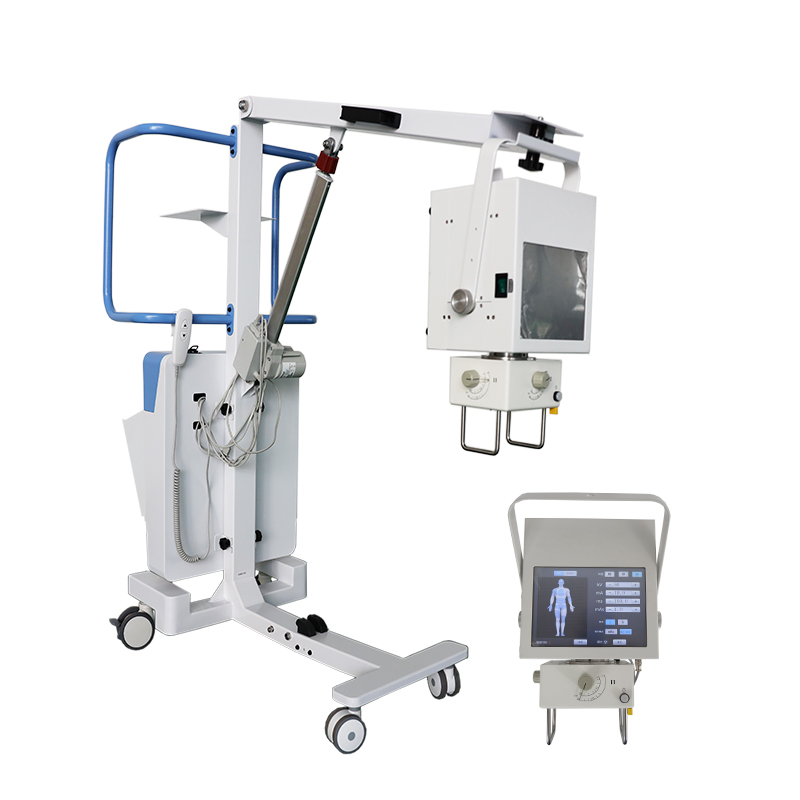
The generator decides how fast and how stable every exposure is. For an orthopedic clinic, a 200-500 mA system covers nearly all work, from extremities to the lumbar spine. Newheek’s NKX500 500 mA medical diagnostic X-ray machine, for example, works at 40-125 kV with a 10-640 mA tube current range and is designed for chest, extremities, pelvis and lumbar spine studies. Modern high-frequency generators also control exposure more precisely and produce less soft radiation than old analog generators, which keeps patient dose lower and image quality more consistent. You can read the details in our high frequency vs analog X-ray machine comparison.
If your budget allows, a digital flat panel detector removes film and darkroom steps, and a doctor can read the image within seconds. Newheek offers both wired and wireless flat panel detectors from 14×17 to 17×17 inches in the flat panel detector range. Clinics that already use cassettes can keep them with the same stand and table. Whichever option you choose, make sure the bucky tray and the table slot match the detector or cassette size you plan to use, so the unit does not need a second modification later.
Bone work needs multiple views. Standing chest and spine films need a vertical bucky stand, while extremities and pelvis studies are done on the table. A radiography table plus a vertical bucky stand covers the widest variety of studies in one room. Check the vertical travel range of the stand and whether the slot depth suits your detector or cassette (for reference, the wall-mounted bucky stand NK17SG/SY has a 35 mm slot and is also available as a mobile version). See the full bucky stand category and radiography table category for compatible combinations.
A low-dose machine protects both the patient and the staff who stand next to it every day. Ask about generator frequency, exposure timing precision, and whether an APR system stores the common exposure protocols for you. Fast imaging reduces shooting time and waiting time, and it improves both patient flow and the profitability of the room. A simple interface with automatic adjustment functions lets your technicians produce accurate films quickly even during busy hours, so keep “ease of operation” on your checklist rather than treating it as a bonus.
Measure the room before buying. A typical orthopedic setup needs a generator with a table or stand and a detector, a control position behind proper shielding, and an erect bucky for standing spine and chest views. Think about whether the same machine should also serve chest and general studies. Adaptable systems allow you to add a detector or an extra stand later without replacing the generator, which protects your investment as the clinic grows.
Equipment is only as good as the support behind it. Choose a reliable supplier who provides installation guidance, commissioning and after-sales service and can respond to failures quickly. This becomes critical when your electricians must prepare the power supply and the shielding room – the supplier should send you an installation drawing and a preparation checklist before shipment. If you are installing a 500 mA class unit, our X-ray machine power requirements guide explains the supply conditions you need to prepare.
| Item | Suggested option |
|---|---|
| Generator | 500 mA high-frequency unit, e.g. NKX500 (40-125 kV, 10-640 mA) |
| Table work | Four-way floating radiography table or movable flat table |
| Erect views | Wall-mounted or mobile vertical bucky stand, compatible with cassette / CR / flat panel detector |
| Detector | Wired or wireless flat panel detector, up to 17×17 in |
| Support | Installation drawing, commissioning and remote technical support from the manufacturer |
Tell us your room size, expected patient volume and whether you already have cassettes or DR panels. Newheek is an original manufacturer, and our engineers will suggest a configuration for your actual workload instead of a fixed package.
DR with a flat panel detector is recommended for newly equipped clinics because it removes film handling and shows the image in seconds, which fits the fast turnover of orthopedic outpatients. If the budget is tight, cassette/CR imaging remains a workable lower-cost start, and the same table and bucky stand can be upgraded to a DR panel later.
200 mA is the comfortable minimum for extremities. For pelvis, hip and lumbar spine studies, a 300-500 mA generator gives more exposure margin and shorter exposure times. A 500 mA system such as the NKX500 covers the complete range of orthopedic work and leaves headroom for chest and general studies in the same room.
Yes. A radiography table for extremities and pelvis plus a wall-mounted or mobile bucky stand for standing spine and chest views forms the standard single-room orthopedic configuration. Confirm that the bucky slot fits the same detector or cassette size used on the table, so one detector serves both stations.
The supplier should provide the room layout, shielding requirements, and the power supply conditions in advance. Electrical preparation usually includes a dedicated supply line, a reliable protective ground, and enough room clearance for the tube stand travel range. Contact the manufacturer before ordering so the installation engineer can confirm your specific conditions.
We are a manufacturer specializing in X-ray machines and accessories. For a quote or a layout suggestion, contact us: WhatsApp / Tel: +86 19015366638, Email: newheekcn@163.com.
Author: X Ray Machine Accessories
E-mail: newheekcn@163.com
Tel: +86 19015366638
Whatsapp:+86 19015366638
Company: Weifang Newheek Electronic Technology Co., Ltd.
ADD: E Building of Future Star Scientific Innovation Industrial Zone of No.957 Wolong East Street, Yulong Community, Xincheng Sub-District Office, Weifang Hi-tech Zone, Shandong Province, China