In 2026, the global flat panel detector (FPD) market stands at a critical intersection of technological iteration and domestic import substitution. According to industry data from Global Info Research, the global FPD market will maintain a steady CAGR of 2.9% from 2026 to 2032, while the dynamic FPD segment will see a higher growth rate of 3.8%. Surging demand from medical and industrial non-destructive testing (NDT) scenarios is continuously driving the optimization and upgrading of core technology routes. For medical device manufacturers, industrial NDT system integrators and end procurement users, clarifying the differences between different technical routes is a core prerequisite for making cost-effective selection decisions.
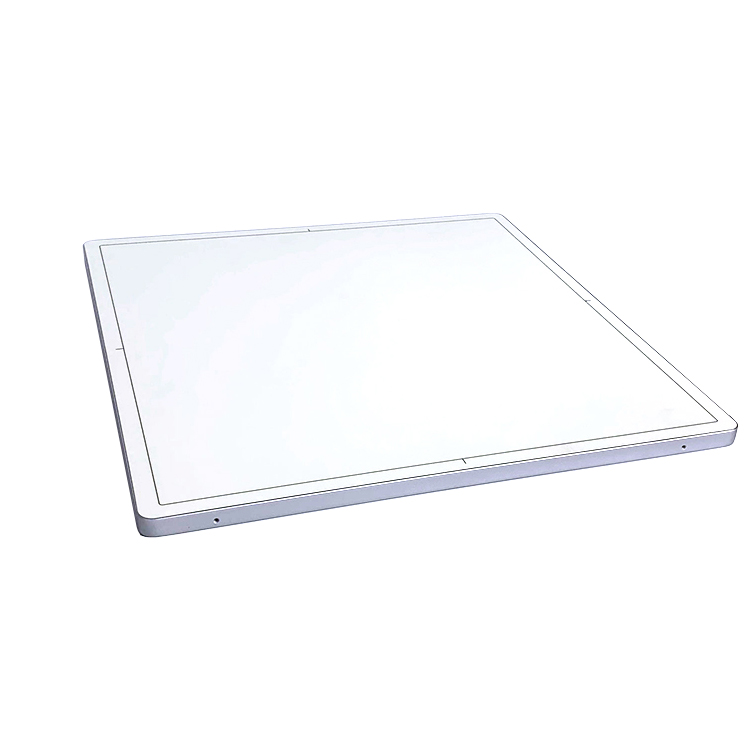
Horizontal Comparison of Mainstream Technology Routes
Currently, the core technical routes of FPDs on the market are mainly divided into four categories: amorphous silicon (a-Si), IGZO TFT, CMOS, and amorphous selenium (a-Se). Different routes show significant differentiated characteristics in core performance:
Amorphous Silicon (a-Si) Flat Panel Detector
As the most mature and widely applied classic route in the industry, it features outstanding imaging stability, low dark noise, and a well-established technical ecosystem. When paired with gadolinium oxysulfide or cesium iodide scintillators, it can meet the imaging requirements of the vast majority of conventional static DR applications. In 2026, leading domestic FPD manufacturers have achieved a pixel pitch of 127μm for their mainstream a-Si models, with some high-end variants reaching 100μm and a dynamic range exceeding 16-bit, fully covering the basic needs of primary medical radiography and conventional industrial flaw detection. Its main limitation lies in the frame rate, which is generally capped below 30fps, restricting its performance in high-speed dynamic imaging scenarios.
IGZO TFT Flat Panel Detector
This is the fastest-growing technical route in 2026. Leveraging the high carrier mobility of its material properties, it combines the large-area imaging advantage of a-Si detectors and the high frame rate feature of CMOS detectors. Top-tier IGZO dynamic FPDs can deliver a maximum frame rate of 85fps while maintaining extremely low image noise, making them perfectly suitable for medical scenarios requiring real-time continuous imaging such as interventional surgery and dynamic DR fluoroscopy. They are also rapidly gaining popularity in industrial applications like on-line inspection of new energy batteries. Compared with traditional a-Si products, IGZO detectors boost the frame rate by 2-3 times while reducing overall power consumption by more than 25%.
CMOS Flat Panel Detector
The core advantages of this type of detector are high frame rate and high sensitivity. Models with small pixels deliver exceptional imaging sharpness, making them highly suitable for niche scenarios with extremely high detail resolution requirements, such as dental CBCT and precision electronic packaging inspection. However, limited by the wafer size of CMOS chips, the manufacturing cost of large-area models remains very high, and it is challenging to control the imaging uniformity across a large field of view. At present, CMOS FPDs are mostly concentrated in small and medium-sized niche segments and have not yet achieved large-scale popularization in the large-area DR flat panel market.
Amorphous Selenium (a-Se) Direct Conversion Detector
As the representative of direct FPD technology, it eliminates the scintillator conversion step and directly converts X-rays into electrical signals, delivering top-tier image clarity and spatial resolution. It occupies an irreplaceable position in medical scenarios that demand extremely high soft tissue imaging accuracy, such as mammography. However, its technical threshold is extremely high, with only a handful of international manufacturers mastering mass production capabilities. The products are expensive and have strict requirements for ambient temperature and humidity during operation. Currently, they are only used in high-end specialized medical equipment and are difficult to widely deploy in general scenarios.
Author: X Ray Machine Accessories
E-mail: newheekcn@163.com
Tel: +86 19015366638
Whatsapp:+86 19015366638
Company: Weifang Newheek Electronic Technology Co., Ltd.
ADD: E Building of Future Star Scientific Innovation Industrial Zone of No.957 Wolong East Street, Yulong Community, Xincheng Sub-District Office, Weifang Hi-tech Zone, Shandong Province, China